

Improving health for mothers and babies
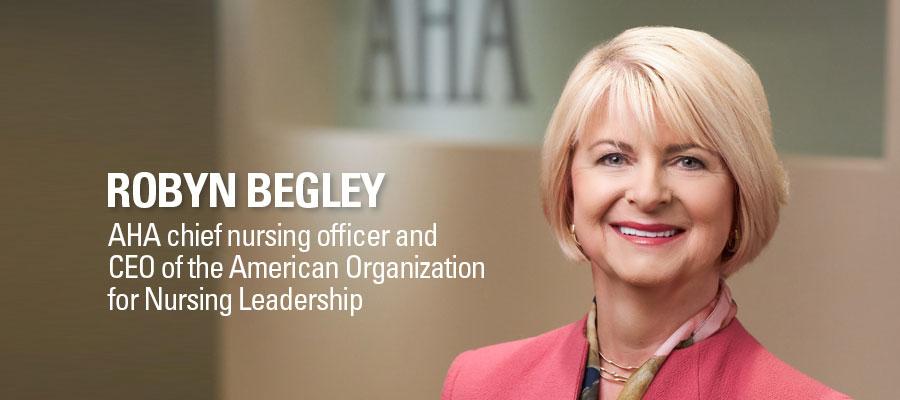
As a former OB/GYN nurse who has seen both the joy of healthy newborns — as well as the trauma and despair that resulted from cases of infant morbidity and mortality — the work we do as a hospital field to improve mothers’ and babies’ health, including reducing maternal morbidity and eliminating maternal mortality, is close to my heart.
The American Hospital Association shares my passion for improving health for mothers and babies. As part of our commitment, we launched AHA’s Better Health for Mothers and Babies effort earlier last year with the goal of eliminating maternal mortality and reducing morbidity related to childbirth. To achieve this, we have identified four actions that hospital and health system leaders can implement to help improve outcomes: evaluate and act on data, examine and eliminate disparities, engage mothers and their families, and partner with community stakeholders.
While this is challenging work, hospitals and health systems are implementing approaches that have been demonstrating positive outcomes.
For example, Samaritan Health Services (SHS) in Oregon implemented a program that employed bilingual and bicultural team members to improve birth outcomes for high-risk pregnant women in their region. As a result, these women had access to care and screenings for medical, obstetrical, and psychosocial concerns, among other special issues. Today, the Samaritan Maternity Connection program is in all five of the SHS hospitals and the three county health departments.
And Philadelphia-based Penn Medicine implemented its Heart Safe Motherhood program to improve outcomes of postpartum women in the days following their discharge, where women who have high blood pressure can monitor it with a cuff provided by Penn. This intervention, coupled with a mobile app and targeted text messaging, has enabled the care team to safely adjust participants’ blood pressure medications and decrease their postpartum hypertension readmissions.
As 2019 comes to an end, I am encouraged by this work. And, as 2020 approaches, the AHA remains committed to working to eliminate maternal mortality and reduce morbidity related to childbirth. We will continue to highlight innovative programs, share benchmarking tools, and partner with experts to ensure hospitals and health systems have the best resources available to guide their work.
We also encourage you to join us in Austin on April 7, 2020 for our Executive Forum: Accelerating the Momentum on Maternal and Child Health. We have an exciting lineup of speakers at this complimentary, AHA-members-only event that will spark discussion around how hospitals can improve health for mothers and babies through innovation and collaboration with a diverse range of stakeholders. View the full agenda and register at www.aha.org/austin2020.
Want to learn more about AHA’s Better Health for Mothers and Babies initiative? Visit our webpage to learn how hospitals and health systems can better address maternal morbidity and mortality.
Robyn Begley, DNP, R.N. is AHA senior vice president and chief nursing officer and CEO of the American Organization for Nursing Leadership.